

She Did Everything Right.
For Two Years. Nothing Happened.
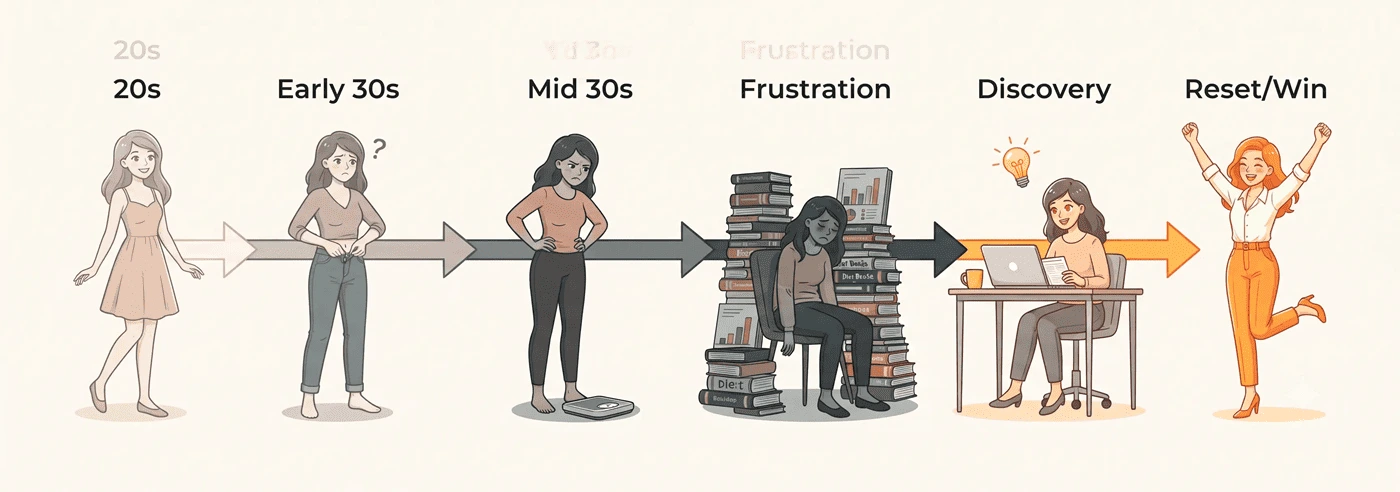
Linda is 43. Lives in Phoenix, Arizona. Two kids, full-time job, and somewhere in the last six years, the body she knew stopped responding to anything she tried.
It started subtly. The jeans that used to fit easily became a little snug. The weight she used to lose before a vacation stopped coming off. She assumed stress. Life. Getting older. She pushed through.
By 41, she was working out four days a week and eating fewer calories than she ever had in her twenties. And she was heavier than she'd ever been.
She tried everything the wellness industry offered. Keto — lost 8 pounds in two weeks, gained 11 back in a month. Intermittent fasting — fine for three weeks, then relentless hunger. A fat burner from her gym — heart racing, couldn't sleep, stopped after ten days. A personal trainer for six months — got stronger, didn't lose an ounce of fat.
Each failure felt personal. Each plateau felt like proof that something was fundamentally broken — inside her.
But here's what Linda didn't know. What almost nobody tells women and men over 35:
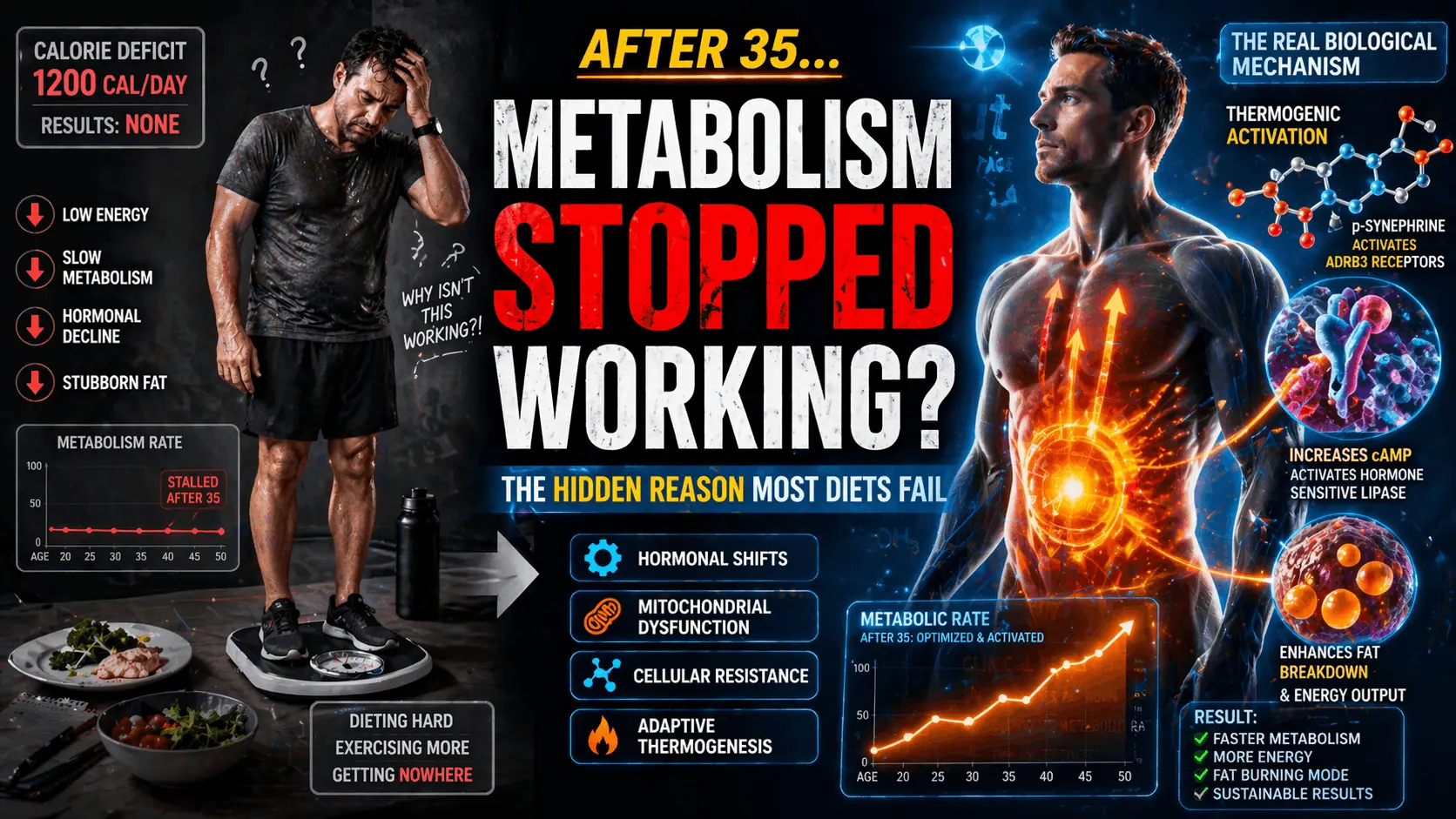
A specific physiological shift happens in your mid-30s that changes how your body responds to diet and exercise at the cellular level. It's not about trying harder. It's not a character flaw. It's a measurable biological event — and it has a name.
What's Actually Happening in Your Body
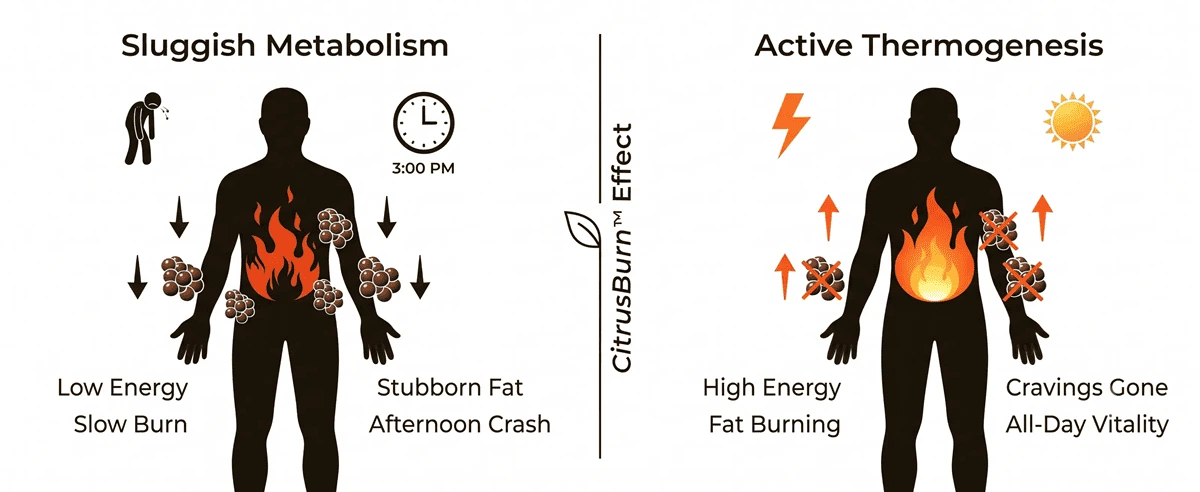
Scientists call it thermogenic resistance. Your body has a natural fat-burning mechanism called thermogenesis — it's how you convert calories into heat and energy throughout the day. Think of it as your internal furnace.
In your 20s and early 30s, that furnace runs hot and responds quickly. Eat better for a week — the furnace burns more. Add exercise — the furnace burns more. Your body is metabolically flexible and responsive.
After 35, especially in women, the furnace starts ignoring the signals. You add fuel (exercise), you reduce intake (dieting) — and the furnace barely changes. You're working hard, but the mechanism isn't responding. That's thermogenic resistance.
🤔 Why Does This Happen After 35 Specifically?
Three things converge around this age that suppress thermogenic function:
- Hormonal decline — Estrogen, testosterone, and growth hormone all drop, and each plays a role in maintaining thermogenic fat (brown adipose tissue) activity.
- Accumulated diet cycles — Every round of caloric restriction trains your body to conserve energy more efficiently. The more you've dieted, the lower your metabolic floor gets.
- Cortisol elevation — Chronic stress (which tends to peak in the 35–50 window) directly suppresses thermogenesis. Your body thinks it's in survival mode and holds onto fat stores.
The result: the exact strategies that worked before now actively make the problem worse. More restriction → lower metabolic floor. More high-intensity cardio → more cortisol → more fat retention. It's a trap — and standard advice walks you directly into it.
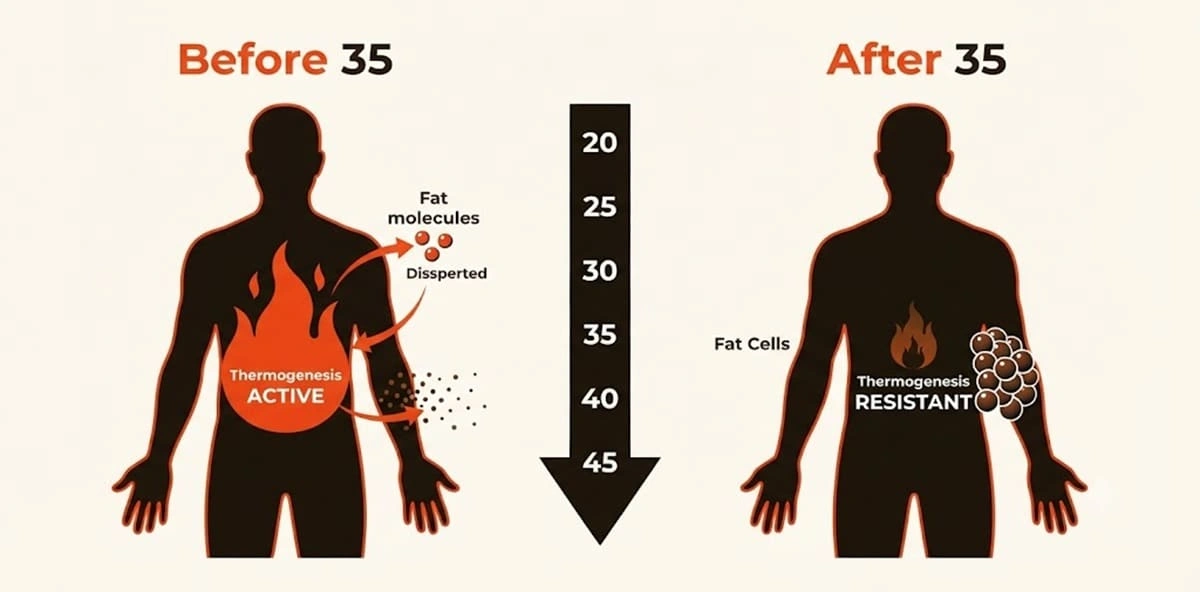
Before vs After 35: What actually happens to your fat-burning mechanism
Linda eventually found this research — the specific mechanism behind why her body had stopped responding. And for the first time in two years, she had an explanation that wasn't about effort or willpower.
What she found next was CitrusBurn™ — a formula designed specifically around this biological shift. Not a stimulant. Not an appetite suppressant. A compound that targets the thermogenic receptor pathway directly, in a way that remains responsive even when everything else has stopped working.

"Within the first two weeks the afternoon energy crashes stopped. By week four I noticed my clothes fitting differently. I'm down 19 pounds and I feel like myself again for the first time in years. Not a miracle — but it felt like one because nothing had worked in so long."